Friday, January 26, 2007

Australia Day

On April 20th, 1770, Captain James Cook and the crew of his ship, HMS Endeavour, became the first Europeans to see the east coast of what we now call Australia. He named the land New South Wales, after his homeland of South Wales, and claimed it for Britain.

Back in England, the jails were overflowing with prisoners. Despite the fact that Captain Cook had made contact with the Aborigines, the British declared that New South Wales was uninhabited [no one lived there] and sent 11 ships full of prisoners there to start a colony. These ships are now known as the First Fleet. The First Fleet arrived in Sydney on January 26th, 1788 – 219 years ago today!

A ship like one of the First Fleet in modern-day Sydney Harbour.

January 26th is now celebrated as Australia Day, a national public holiday that is marked by special events around the country. Many towns & cities hold special ceremonies & fireworks displays. The Prime Minister of Australia gives a special address to the nation [a speech that is broadcast on TV & radio stations], and special awards are presented to Australians who have done good things. Also on this day, there is usually a special cricket match, as well as some big outdoor music festivals.

The Australian Flag – The Union Jack [British Flag] represents Australia's connection to Britain; the 7-pointed star, the 7 states of Australia; and the other stars, the Southern Cross [ a group of stars you can usually see from the southern half of the Earth].

Not everyone thinks that Australia Day should be a celebration! Aborigines hold “Invasion Day” and “Survival Day” events, protesting the fact that their country was invaded [taken over by force] by the British and celebrating that their people & culture somehow survived.
Some anti-Australia Day graffiti on a wall in the Rocks, the oldest part of Sydney.

The Australian Aboriginal Flag – The black represents the people; the red, their land & blood; and the yellow, their sun.

Friday, January 19, 2007

Plutoed!

Last August, the International Astronomical Union, a group of scientists specialising in the study of the planets and the stars, decided that Pluto should not be counted as one of the Sun’s planets anymore. This was mainly because recently other bodies have been found in our solar system that are nearly as big or even bigger than Pluto. We can expect many more to be found in the near future. If we keep calling Pluto a planet, we’ll have to add many new names to the list.

Size does matter!


Every year, the American Dialect Society, a group of teachers, writers, and editors, chooses a newly created English word as “Word of the Year.” This year they chose the new adjective Plutoed, which means to be demoted or lowered in value.

Here’s an example: David Beckham has been Plutoed by Real since announcing that he is moving to America in June.

Here’s another example…

Peko-chan…Plutoed!

Friday, January 12, 2007

My New Year's Resolution (Part II)

One of my New Year's resolutions last year (or was it the year before?) was to get some of my photos published [printed in a book or magazine]. To this end, I entered some photos in a couple of on-line photo contests. One of them was Japanzine's "Gaijin Eye" contest. Unfortunately, none of my photos were chosen for the main pages, however, one of my photos was used as a column-filler...

Page 28 of this month's Japanzine


Page 28 of this month's Japanzine – up close!


Here’s a link to their main selection: The Gaijin Eye

And here's the link to my Japazine entries: My Entries

I know any kind of judgement is very arbitrary [a personal choice not based on clear rules] but, to be honest, I didn't think "Too Wet for the Park" was my best photo. Of course, I understand that maybe it wasn't chosen purely on its photographic merits [good points] – it might have had something to do with their desire to show a cross-section [variety] of images of the Kansai.

You can also check out all 800-odd entries at: All Entries

Anyway, my new New Year's resolution is to get published in a size that doesn't need a magnifying glass be viewed!

A Magnifying Glass

Wednesday, January 03, 2007

TV or Not TV? [!]


As a lot of you probably made “study English” or “study English more” one of your New Year's resolutions, I’ve decided to recommend a few TV shows that might help you out. Actually, I don’t really believe that TV is a very good teacher. When you watch TV, your mind becomes very passive – the information just flows over you but you don’t really remember it. If you don’t believe me, think of the last time that you watched news on TV. Probably less than a day ago, right? OK, think of 3 stories from that program. You can’t do it, can you? There were definitely more than 3 stories covered in that broadcast but your brain doesn’t remember them. (This is also one of the reasons that watching TV news is not as important as all the TV companies want you to believe it is – but that’s another topic!)

However, even though I don’t think TV is a good teacher, I do think it’s good at reinforcing what you already know in a fun way. It’s important that you study a little English every day. In the long run, half an hour of study every day will have more effect than 3 to 4 hours of study only once a week. Watching interesting & fun English-content TV shows can help you to spread your study throughout the week – especially if you work hard to make your mind more active while you are watching!

You can start with “Eigo De Shabera Night!” Their usual broadcast time is Fridays, from 11:00 pm. They also have a great HomePage (Eigo De Shabera Night), where you can check out upcoming shows and transcripts of interviews from previous shows.
The Regular Cast of "Eigo De Shabera Night"

A great way to make watching the show more active is to cover the Japanese subtitles during the interview, and then check out how much you could understand by reading the transcript on the HomePage the next day. Then, choose a useful phrase or word from the transcript and write 3 new sentences using it.

One of my wife’s favorite regular guests on that show is hard-rocker Marty Friedman (click on his name to visit his HomePage). He’s going to be a regular presenter on a new show called “Jukebox Eikaiwa,” on NHK (channel 12) from 11:10 pm on Thursday nights. Marty and the other presenters are going to studying the meaning of famous song lyrics. I often do this is in Be & Me lessons – it’s a fun way to learn new words and phrases!

The Regular Cast of "Jukebox Eikaiwa"

Have fun! But remember: Don’t just sit there – get active!

Monday, January 01, 2007

My New Year's Resolution

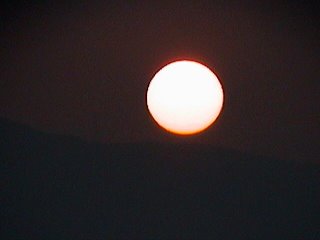
The New Year's Sunrise - 3 years ago!
First of all: Happy New Year!

If you’re reading this in Japan, you probably celebrated the new year by eating lots of traditional food, visiting a shrine to make your first prayers, and reading New Year’s greeting cards, before settling in for a lazy day in front of the TV.

For people in Western countries, New Year’s Eve is actually more important than New Year’s Day – we prefer to “wash away” the old year (with lots of beer & champagne) rather than greet the new one. Most people spend New Year's Day sleeping off a massive hangover and vowing [making a really strong promise] to never drink that much again.

Most people start the year by making some really strong promises. We call them New Year’s resolutions. A resolution is a really strong promise you make to yourself to do something difficult that is good for you. Some common examples of New Year’s Resolutions are “I will lose weight” or “I will study English more.” Good resolutions include some kind of number and time frame so that the achievement of the resolution can be measured. Instead of “I will lose weight,” you should say, “I will lose one kilogram a month” or “I will go to the gym 3 times a week.”

So, here’s one of my New Year’s resolutions: I will make an entry on this Blog at least once a week. “At least” means this is the minimum – I might make more than one entry a week, but I must make one every week!

Of course, I have some other resolutions. I’ll share another one with you in my next entry.

How about you? What are your New Year’s resolutions? It’s best to tell your friends & family what your resolutions are – they can help keep you honest! Post your New Year’s Resolutions as a comment – we’ll do our best to help you keep them!

Sunday, December 03, 2006

Special Notices for December

Sorry it's been so long since my last post -- I've been flat out like a lizard drinking!
Here are some important notices for December...
Be & Me Kids' Model Lessons in December
We are holding model lessons for our kids' classes on Tuesdays. Full details in Japanese are at Be & Me Kids


Service Lesson for December
Our December service lesson will be held on Saturday, December 16th, from 4:00 pm. Please note the later time than usual!


End-of-Year/New Year Holiday Dates
We will be closed from Friday, December 29th, to Wednesday, January 3rd. Have a great Holiday!
I'll post again soon -- I promise!

ホームへ

Sunday, November 05, 2006

Inner Sky

Every month our friend Simon hosts a live concert at Covent Garden, a really relaxed and friendly bar in Kita Horie. (Go there hungry -- they make great hamburgers!) This month's concert is helping to raise money to hold Christmas parties for kids in hospital. Lots of bands will be playing --it promises to be a great night!

Sunday, October 08, 2006

Saturday, September 09, 2006

Live Long and Prosper!


On this day exactly 40 years and 1 day ago (I intended to make this post yesterday but...!), the very first episode of Star Trek was aired on American TV. I was nearly 3 years old. However, American TV shows were usually broadcast 3 or 4 years later in Australia. I was 6 or 7 when Star Trek had its first run in Australia. It was groundbreaking (trying new things) TV, addressing such taboo subjects for the time as sexual equality & liberation, racial descrimination and integration, the futility of war, and even the explotation of the working class -- dangerous topics for the establishment (government & big businesses) to allow in the middle of the Cold and Vietnam Wars. (However, as a 6 or 7 year old, these topics were not the main attraction -- I was mostly interested in the monsters!) For this reason, the program ran very late -- around 11:00pm (just before the TV stations used to turn off for the night!).

[Oops! My boy's sick. He's calling me! More to come -- promise!]
A Poster Promoting the 4oth Anniversary I Spied on the Kintetsu Line

Friday, September 08, 2006

Groove Harvest

Let’s be honest: summer in Osaka is nearly unbearable – it’s so hot & muggy! Finally, there’s a taste of autumn in the air! Now is the time to turn off our air-conditioners and get outside – before it gets too cold!

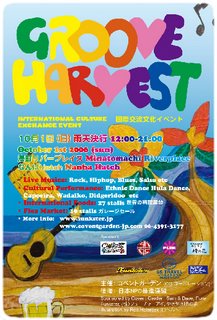
A yearly autumn event that we never miss is Groove Harvest, a big outdoor music festival organised by our friend Simon, the man behind the monthly Inner Sky concerts at Covent Garden.

This year’s Groove Harvest is scheduled for Sunday, October 1st. There’ll be live Rock, Hip hop, Blues, & Salsa music, Hula Dance, Capoeira, & didgeridoo performances, lots of food stalls, and a flea market. Click on Groove Harvest to get more information in Japanese.

The background illustration for this flyer is by Rob Holbrook. A couple of years ago, Rob had an exhibition at our school. You can check out pictures from that event at the following link...

Rob
Rob's Work
Rob's Work
Rob's Party

Monday, August 21, 2006

Mondayitis on a Friday!

In English, many disease names end in “itis.” For example, hepatitis, laryngitis, tonsillitis, appendicitis, bronchitis – the list could go on forever!

Across the world, many workers and school students feel a kind of sickness in their stomachs on Sunday night as they’re getting ready for bed or when they first wake up on Monday morning. Do you know that feeling? It’s a physical reaction by your body caused by the fact that you don’t really want to go back to school or work. In English, we call this sick feeling “Mondayitis” – a sickness caused by Mondays!

Now, I love my job! No! I really do!!! However, last week it was Obon, a special period when Japanese people believe their ancestors come back to visit them. Our school had a 6-day holiday – a rarity these days! We didn’t go away. Instead, we stayed close to home and did something special every day: dinners with friends, a BBQ at a friend’s house, “super-slide” rides in the park, a trip to the beach, and even a couple of movies on DVD. It was great!

Our school opened again on Friday. I’ve got to be honest, even though I love my job, I found going back to work a little hard because I’d had such a good holiday. I was suffering from Mondayitis on Friday!

It’s Monday. I’ve been back at work for 3 days (I even worked yesterday!) so I’m over my Mondayitis now. I’m already forgetting what fun I had on my summer holiday. I guess I’ll have to wait until…

Tuesday, August 08, 2006

Chastised, Scolded, Roused At!

To chastise, scold or rouse at someone means to speak angrily to someone because they’ve done something wrong or haven’t done something they should have.

Last night, our student Tomoko severely (very strongly) chastised me because I haven’t been updating this Blog often enough. Also, Yasuyo, Yoshi & Takumi have all commented on the fact that my last entry was at the beginning of July. I’m sorry! I’m a procrastinator & I’ve been flat out like a lizard drinking!

However, I promise I’ll post a new entry here very soon. Really!!!

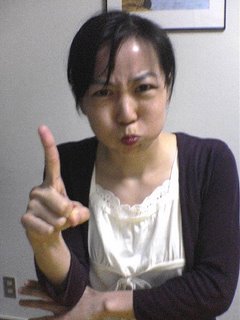
Tomoko Ticked Off! (And she knows aikido!!!)
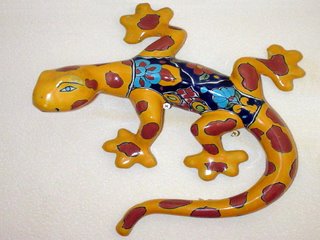
PS Rouse at is Australian English, most commonly used with children. I've been trying to check the spelling but can't find it in any dictionaries. If you use it, use it with care!
PPS Ticked off means angry

Tuesday, July 04, 2006

Flat Out Like a Lizard Drinking!

Sorry it’s been sooooo long since my last entry – I’ve been flat out like a lizard drinking!

In “standard” English (there’s really no such thing!), to be flat out means to be trying your hardest or to be very busy.

Here are some examples…

Even though he was running flat out (trying his hardest), he didn’t win the race.

We were so flat out (busy) at work, I didn’t have time for lunch.

To be flat out also means to lie very flat on something.

Here’s an example of that meaning…

He was lying flat out on the sofa, fast asleep.

It’s a curious fact that lizards can’t swallow because of the inside shape of their mouths. When a lizard drinks, it has to push itself against the ground – lie flat out – and flick water down it throat with its tongue.

In Australia, we like to make our English sound more interesting by using unexpected comparisons or by replacing commonly used words with well-known but unexpected ones. When we’re very busy we often say, “I’m flat out (busy) like a lizard drinking (lying very flat).” This comparison doesn’t make any sense, but we Australians think it makes our speech sound more colourful.

Next time you feel you have too much to do, say “I’m flat out like a lizard drinking!” It’ll make you smile, and that’ll make your work just a little easier to get through!

Thursday, June 22, 2006

Oops!

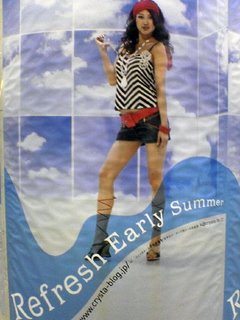
If you walk to our school through Crysta Nagahori, you probably see hundreds of these posters every week…

As I sit here in my shorts, the drizzle of the rainy season outside competing with the sound of the fan whirring away in the background, I think that some kind of refreshment would be nice. But what about “re-flesh-ment?” That’s right! I said “flesh!” When these posters first went up in April, the message along the bottom was slightly different…
“Flesh” means the soft parts of an animal’s body, the muscle and fat – the raw meat!

Luckily, I took this second photo as soon as I saw the original posters. Only a week or so after they first went up, they were all replaced.

Someone made a little mistake that cost the advertisers the price of reprinting all the posters again. When you make a mistake like this, there are many things you can say. Unfortunately, I can’t teach you most of them here! Probably the best thing to say is, “Oops!” Next time you do something wrong, give it a try.

Thursday, June 15, 2006

Rain, Rain, Go Away!

Rain, rain, go away.
Come again another day.
Little Johnny wants to play,
So rain, rain, go away!

I sing that nursery rhyme to my son every day it rains. Today is one of those days! It’s been raining non-stop since I woke up. My son loves to play outside. If he doesn’t play outside at least once a day, he builds up too much energy. All that unused energy turns into naughtiness – and then no one’s happy!

Luckily, today is one of my “lazy” days. I don’t have classes until the evening, so I was able to help my wife take him out. We went to a local shopping mall where we did some shopping (we bought a new rain cover for our son’s stroller!), visited a pet shop, had lunch at a family restaurant, and spent an hour or so in a kids’ amusement center. The boy’s sleeping now, so I guess that’s “mission accomplished!”

In English, we have many ways to describe rain. If it’s only raining a little, just a drop here and there, we can say, “It’s spitting.” If it’s a little heavier, just enough to need an umbrella, we can say, “It’s drizzling.” I guess a day like today would just be described as rain. However, if it were much heavier, we could say, “It’s pouring.” When it’s raining really, really heavily, we can say, "it’s raining cats and dogs!”

That last expression originated in England 3 or 4 hundred years ago. Back then cities were much dirtier than they are now. Buildings were built very close together, and people threw their kitchen scraps out their windows. Dogs & cats would live off the scraps that piled up between the buildings. When they died, their bodies stayed stuck between the buildings until very strong rains washed them out into the streets. When people passing by saw the bodies, they would jokingly say the bodies had fallen from the sky with the rain.

Next time it rains, try to describe what type of rain it is using one of the phrases above. In the meantime, spare a thought for me – I’ve got to ride to the station in the rain now, and it’s pouring!

Wednesday, June 14, 2006

The Procrastinator

Welcome to the Be & Me Blog – at last! Hopefully, this Blog will be a fun place for the students of the Be & Me Eikaiwa Club, and other students of English, to practice reading.

Today’s key word is…


Procrastination


Procrastination is to think about doing something for a long time but to never actually do it.

I’m the King of Procrastination. This Blog is a perfect example: I created it in January, but haven’t got around to posting an entry on it until today, June 14!

Most of us are procrastinators to some degree. The secret to overcoming procrastination is to – as they say in the Nike ads – just do it!

The Procrastinator
"I'll be back – eventually!"